
We just passed the second anniversary of the Apple Vision Pro. At launch, it was—and is—an amazing piece of technology. I initially reacted with excitement to this new device category.
But the Vision Pro also faced plenty of doubts. This amalgamation of metal, glass, cameras, displays, and processors needed to prove utility beyond tech demos. Sadly, now two years in, the skepticism has largely been warranted.
Let's first give credit where it's due. Its display quality remains spectacular. The eye- plus hand-tracking control scheme works well with no other input devices required. VisionOS has improved steadily since launch: the widescreen Mac Virtual Display and upcoming foveated streaming APIs show continued investment in the platform.
But the product has not fully addressed its three major problems since launch: clunky hardware, cost, and lack of content.
One of the Vision Pro's biggest complaints at launch was its weight. Compared to other VR headsets like the Meta Quest or even the older Valve Index VR, Apple's choice of metal and glass construction traded aesthetics for usability. Rumors of a plastic model were obvious and immediate, but that revision never materialized.
EyeSight is the feature where the Vision Pro projects 3D-esque eyes on its front glass while in use. But this was so poorly received that the device's marketing makes no mention of its existence. And yet the expansive glass front remains, and its weight tilts the head forward.
Speaking of weight, the headset overall is so heavy that its battery is a separate component, awkwardly clipped to the side with a wire that gets in the way.
The combined technical prowess is literally outweighed by its encumbrance.
The next issue was cost. At $3,500, it remains the most expensive consumer VR headset, and beyond a processor upgrade from M2 → M5[1] and a better strap, there have been no notable hardware improvements. There are few economies of scale; components like the super-high-resolution Sony displays and the real-time R1 chip are not used in other products, neither Apple's nor other device makers. Wright's Law—the tendency for manufacturing costs to decrease as volume increases—never engages with such low volumes, which keeps costs high and the potential buyer pool small.
The most disappointing miss, though, is the lack of content. Developers seem to be abandoning the platform, making the calculation that it's not worth their efforts to build for such a niche product.
On the positive side, there is now, finally , a dedicated YouTube app. The NBA is partnering with Spectrum Cable to broadcast a handful of LA Lakers games in their immersive 3D format[2]. Apple TV has also built up a moderate catalog of Apple TV shows that showcase the format, though most have the same vibes as the nature documentaries looping on TVs at Best Buy.
Alas, everything outside of Apple's production has stagnated. There was an initial push at launch to bolster the platform with media, games and apps—Disney+ released all its 3D movies, Apple Arcade games were quickly ported over, and experiments like Marvel's What If…? played with new ideas on the device. But without continued investment and a tiny userbase, new content has dried up. IMAX hasn't bothered adding movies or shows since launch. Dedicated Vision Pro apps are few and far between. Even ports of existing Mac and iPad apps have slowed down; the list of top Vision Pro apps is largely the same as it was two years prior.
Like most Vision Pro owners, I rarely find a reason to put the headset on; it has not found its killer app. But, per a Reddit comment the other day, I tried it on—without its light seal, the wool insert that blocks out my peripheral vision. And immediately, the fit is more comfortable. It's less stuffy. With the Annapro A2 strap balancing the hardware on my head, there's also less pressure on my cheekbones.
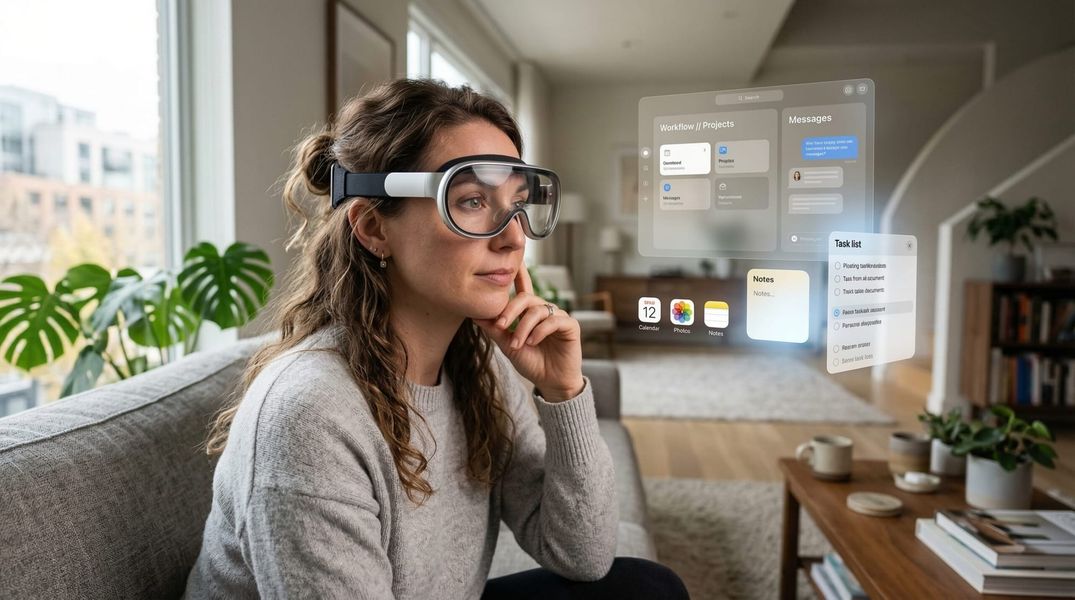
This small, silly adjustment changes the device: from VR, to AR. The real-time picture passthrough on the displays, plus the small strips of my surroundings that bleed through the unsealed edges of the headset, merge into a single cohesive field of view. Moreover, VisionOS keeps track of its spatial location, such that windows and widgets stay in place as I move around, adding to that sense of reality augmented with virtual decor—what Apple calls Spatial Computing. Whereas competing products like the Meta Display Glasses are projecting simplified menus to a single eye[3], the Vision Pro can fulfill the sci-fi ideal of persistent virtual projection onto real environments.
Hence, all the work that Apple has done to develop the Vision Pro, both hardware and software, is very relevant to future AR devices. I also foresee the same problems for any pivot into augmented reality glasses and headsets; weight will remain a major factor, costs will determine mass market penetration, and content will be the difference between a growing platform versus a stagnant one.
Of course, there are already multitudes of rumors to the strategy. The stasis of the Vision Pro, though, makes this an enticing possibility. Apple doesn't need to invent nearly as much as they needed for VR; just half a step of improvement in weight, cost, and content will make for a compelling offering.