
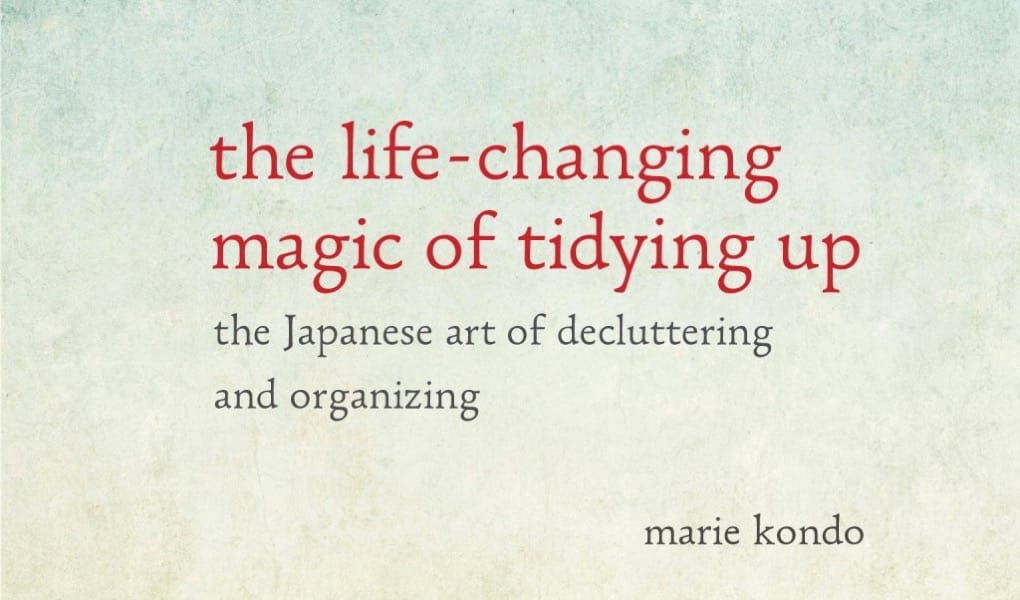
An acquaintance referred me to The Life-Changing Magic of Tidying Up. As much as I like to peruse self-help and self-improvement books, I admit that I probably would not have been interested in this one without a recommendation. Turns out, my gut instinct was mostly on point, although I was ultimately able to take away from it a few pieces of advice.
The book is an English translation of a Japanese tome, written by an author who sounds like she devoted her entire life and career to helping herself and others clean their homes. I’m not its original target audience; there are various sections of Tidying Up which go into great detail about handbag storage and the size of Japanese homes. In fact, the book seems to be written by a single Japanese woman in her 30s living in a Tokyo condo, for other Japanese women with the same life parameters. This disconnect does make a few sections harder to relate to.
Tidying Up still works, though, because it gets into some of the philosophy and zen behind keeping a clean home. If I remember my college Japanese classes, the word is 清い — cleanliness, which is also synonymous with purity and clarity. In other words, Japanese culture[1] ascribes beauty to tidiness, which becomes the motivation for her process. That said, she can lay it on a bit thick, particularly when she starts personifying her possessions and reasoning about the method of their storage affecting how they — e.g., her socks — “feel.”
A central theme is getting rid of one’s stuff, or to flip it around, only keeping things that bring joy to its owner. I do like this idea on the surface, and it inspired me to get donate a set of old clothes and books. My caveat is that this philosophy is not universally applicable, in the same way that “simple” is a luxury; buying replacements for thrown-away items can become unaffordable. I’m not advocating hoarding per se, but the other extreme is bare minimalism, which comes with its own problems and expenses.
I don’t regret having taken the time to read The Life-Changing Magic of Tidying Up , even if my life didn’t follow the title’s cue. Even if I don’t buy into its philosophies, there were a number of tactics that I took away from the book[2], and it made me think deeper about why I’d want a clean home.
Though, as a parent of a 2-year-old who has just gone through his Christmas presents —
This ideal is nigh unachievable.