
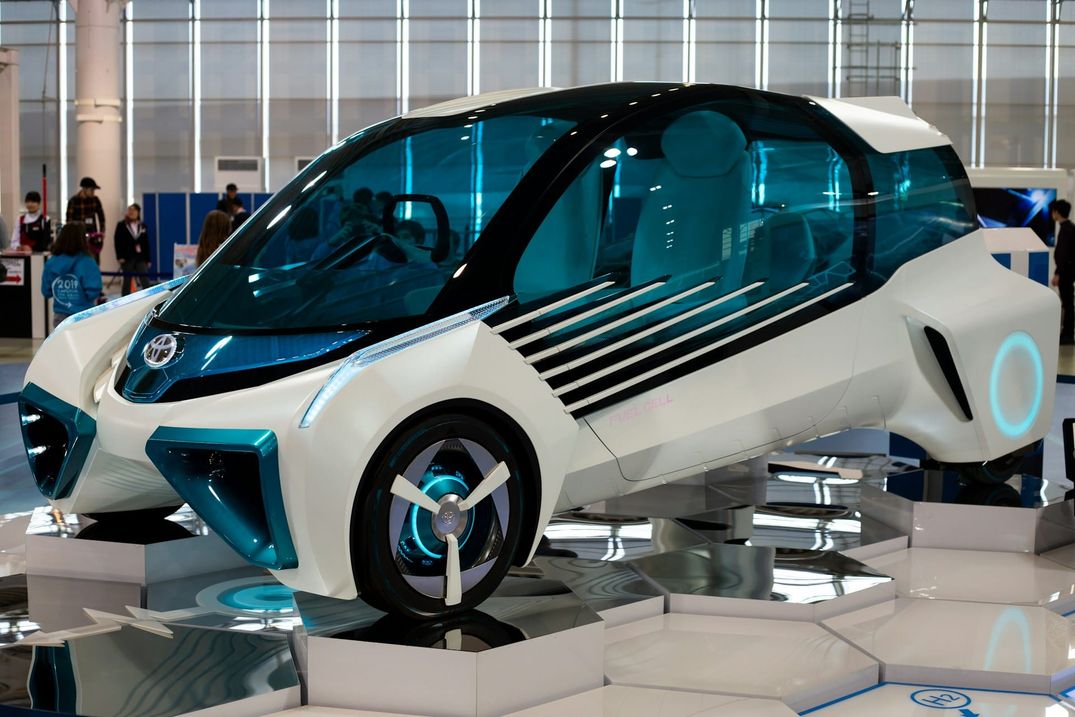
It's a shame that hydrogen fuel cells didn't work out for cars.
On their face, fuel cells were natural successors to gasoline for consumer vehicles: the energy density by weight is superior[1]; the refueling mechanism and duration are similar and much shorter than charging EVs' lithium-ion batteries; the available driving range for conventional tank sizes are also comparable. Whereas EVs have made strides in battery density, size, and charging speeds in recent years, the usage patterns around charging vehicles and their subpar average distances have stalled adoption, particularly after the demand spike post-COVID.
But automakers have been ho-hum about their investments. Toyota has led the way, but remains one of the only companies whose research in this tech has resulted in an actual car launch, the Mirai. Unfortunately, it's the only hydrogen fuel cell model on American roads—California ones, at that—and its meddling sales declined precipitously as hydrogen fueling stations crumble in disrepair. Other manufacturers keep making sporadic announcements on R&D partnerships and collaborations, but with little to show for it in the short term. The best-case scenario, given the discrepancy between what's shown versus what's been said, is that fuel cells are poised to make exponential progress in the way that EVs did, albeit lagging by a decade. If that pans out, all the credit goes to Toyota, who has never quite given up despite all the setbacks noted above and insists that more hydrogen cars are coming.
It's perhaps easy to see but difficult to execute: new formats like fuel types require associated infrastructure. During our road trip down to Death Valley 2 years ago, I started seeing signs that other EV upstarts like Rivian and Lucid recognized the need to set up their charging station networks, following in Tesla's footsteps. Maybe it's how much money these companies are already spending and losing; maybe Tesla's first-mover advantage has proven too overwhelming for others to catch up. But these followers-on don't seem to be building to a critical mass of chargers, and by last year pretty much all EV manufacturers consolidated around the Tesla charging standard, now renamed NACS, with most striking deals to access their extensive Supercharger network.
Hydrogen fuel cell vehicles launched with a very limited number of fuel stations centered around the Bay Area and Los Angeles and couldn't expand beyond this very limited geographic footprint. It's made worse by the unreliability of both the fueling hardware and the supply of available hydrogen: this list highlights the remaining working retail infrastructure, and its lack of comprehensiveness and convenience hasn't improved much from the Mirai's 2021 launch. It suffered a chicken-and-egg problem from the very beginning and couldn't garner momentum on either the supply or demand of hydrogen to pull up the other side.
The saving grace, though, is with bigger commercial vehicles on planned, predictable trips: namely, trucks and tractors and boats. Here, broad, on-demand infrastructure is less important with cyclic usage, whereas the energy efficiency and cost become the driving factors for adoption. EVs have been slow to make inroads here; the comparative inefficiency of electric drivetrains and batteries means that these vehicles have to carry a lot more of the latter, which makes the vehicle heavier, more expensive to build, more expensive to run, and even necessitates specialized charging stations to output the wattage needed to charge freight trucks in a reasonable amount of time. By contrast, hydrogen fuel can be stored in bulk to power the full trip, and its energy density plays to its advantage, akin to gasoline and diesel.
At this point, fuel cell cars will likely be little more than a blip in automotive history. EVs have gotten good enough, with charging infrastructure mostly robust enough, that they're in the pole position to capture all the R&D and technical advancements that car manufacturers invest and iterate in their lineups. In an alternative timeline, customers would have gladly and seamlessly migrated from gasoline to hydrogen, given the familiarity in fueling and range. Instead, we had EVs that started with terrible range and underwhelming designs, but solved the problem with infrastructure and manufacturing with such speed and flair that it pulled the entire industry towards its path[2] and left fuel cells in the dust.
Though not by volume. ↩︎
And the ongoing coda to that story is that China has further outpaced other EV makers around the world in quality, variety, and cost. ↩︎