
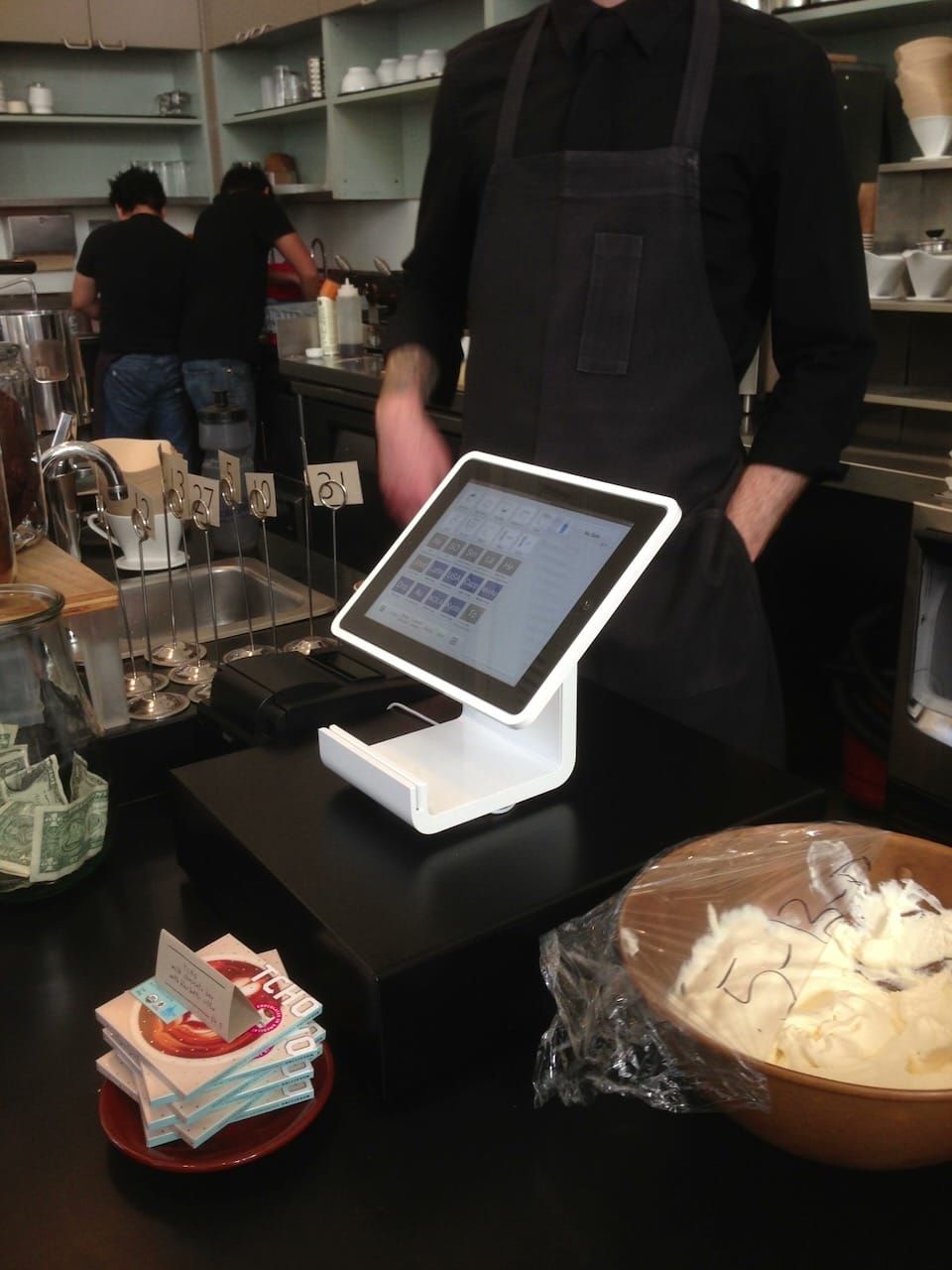
Despite changing its corporate structure and name to Block, and even though it's been over a decade since I last worked there, I will always think of the company as Square.
Those were formative years. For me, Square was the first place I worked that felt like Silicon Valley , news headlines and audacious goals and even in-house baristas. I joined just as the primary payments product reached an inflection point, on the back of a major fundraising round and press attention, with little plastic squares showing up in food trucks and coffee shops around the country. We doubled headcount every year. We acquired other startups and aggressively expanded internationally. Square didn't have the consumer name brand of an Uber[1] or an Airbnb, but we were still known in the tech ecosystem for great engineering and amazing design.
Many of us early Squares also grew up with the company. We married, had kids and brought them into the office. Secondary offerings let people buy houses, and the IPO gave rise to the PayPal-inspired "Square Mafia," alumni who have seeded many other major fintech and fintech-adjacent startups in the past decade. Many of us remember that group of colleagues as some of the best people we've ever worked with.
So the news last week that Block laid off more than 40% of its workforce—over 4,200 employees—landed like a gut punch[2]. These are the people who have built the systems, the tools, the products that have defined payments for the last decade and a half; many have accumulated years of loyalty and strong performance reviews.
The human cost is real, but it's worth investigating the rationale. This announcement stood out, not only because of its sheer scale, but because of the stated reason: AI disruption.
Now, Square is not the first—or last—tech company to cite AI as the reason for layoffs. Workday, Amazon, and even smaller firms like Chegg have attributed their restructurings to artificial intelligence. It plays into the narrative from consultants and analysts that indeed the impact of fully integrating with AI would be worth trillions of dollars in productivity. The loss of hundreds of millions of jobs would be a casualty of this outcome.
But it's precisely this chorus of AI-blaming tech layoffs that raises suspicion. Instead of declining business prospects or simple pandemic overhiring—tripling from 4,000 to 12,000 in three years—it's easier to obscure the narrative by pointing to an inexplicable yet unstoppable wave of technological displacement. Skeptics have termed this maneuver "AI Washing," and there are clear signs that this is actually what's going on at Square. I remember well before the IPO, managers were asked to consider revenue per employee as a metric of talent efficiency, and back then we were lagging the best tech companies at the time. It sounds like this is still an issue all these years later[3], and I guess it's easier to improve the numbers by mechanically reducing headcount.
Jack Dorsey is a polarizing figure. I worked for him for 4½ years, and during that time and ever since, he has been consistent in his philosophy of shaping Square as an expression of his interests. In the early days, this desire manifested with multiple, intensive iterations of Square's nonexistent consumer products, all of which failed until we stumbled onto Cash App. Similarly, Jack's infatuation with restaurants led to an acquisition and eventual sale of the food delivery service Caviar[4].
The corporate restructuring to the conglomerate Block has supercharged this dynamic, and it's hard to decipher any sort of synergistic strategy between the business units. It became a Digital Assets Treasury (DAT) company before that term was formalized, holding $50 million worth of Bitcoin on its balance sheet as a corporate investment of sorts. It acquired Tidal, the music streaming service, to bail out Jay-Z's floundering service but hasn't seemed to do much since, other than keep the lights on. It started a crypto unit called TBD, added something else called Spiral, then wound both down while starting initiatives to build both hardware crypto wallets and Bitcoin mining rigs. I know that many of the Square old-timers—still chugging away at the merchant-centric payments unit that kept the name throughout—rolled their eyes at each new foray.
With all that history, the head-first leap into AI-fication isn't much of a stretch. Reports from the last set of layoffs before this most recent one mentioned that employees were asked to send updates directly to Jack, and many made use of AI to make the task less onerous. The same report claims that Jack also used AI to make sense of his weekly deluge of emails. Square engineers are expected to leverage Goose, their open source agentic AI framework.
Sadly, these layoffs have been dubiously executed at scale. Anecdotes show that even those who made the effort to lean into AI—and were praised and promoted for their skill—were swept up this time anyway. I feel for those ex-Squares who were told that they were on the right track, only to be blindsided by a business decision that doesn't align with the stated rationale.
This reflects a clear risk in perpetuating the mythos around Silicon Valley founders: strategy concentrated in a singular—and in this case, occasionally eccentric—cognitive model. The vicissitudes can shift on a dime, and entire sections of the company are swept into, or out of, relevance.
But I don't want to make light of the situation, not for the thousands of folks who are now added to the long lineage of Square alumni, or even the thousands who are still at the company but now have to try to keep their systems running. None of the reasons, stated or unstated, diminishes the work that past and present Squares have put into the company.
Their offices were two floors beneath ours for a time, at 1455 Market Street. ↩︎
This is on the back of a 10% layoff that was already rolling out last month. ↩︎
Per Om's article linked above, Square lags behind its main payments processing competitors PayPal and Ayden in per-employee revenue by a third. ↩︎
We half-heartedly tried to make the acquisition work, but a fintech company with expertise in risk, payments and merchant services couldn't add much to a business that hinges on real-world logistics. ↩︎